
Decorated Glass "The West Brothers" Period
(1889-1937)
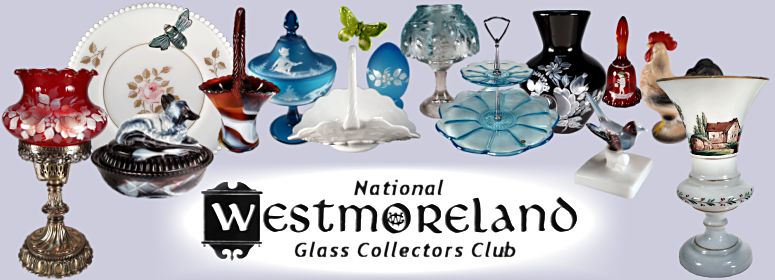
The West Brothers (Charles and George) were the driving force behind Westmoreland from 1889-1937. Their creativity in design and production led to Westmoreland producing a wide variety of glass for personal and commercial use. The Wests recruited decorators from Europe and England as well as hiring high-equality artists from other reputable glass companies such as Steuben and Sinclair. Westmoreland worked in partnership with other glass companies while competing in the same market. Third-party decorating companies often purchased blanks from Westmoreland to use in their own glass lines (for e.g. Devilbiss, Sterling, National Silver Deposit, Indiana, etc.). Sometimes these third-party companies would have the decorated glass included in its own glass line. Westmoreland would also purchase blanks from other glass companies (for e.g. Libbey Glass) and decorate the glass for its own line. This gallery will show the wide variety of decorations that have been found and can be attributed without a doubt to Westmoreland. If there are prevailing arguments regarding attribution those arguments will be discussed.

Westmoreland decorated a variety of its early glass, primarily opal, using the process of "transferware." Transfers were essentially decals that were used in lieu of hand painting, to save time and labor expense. Applied to blanks, the transfers then only needed to be colored over and a few enamel touches added to make them look hand done. Decorating was done using the either the "fired" or "cold paint" method. The "fired" method means the glass was placed back into the glory hole of the kiln and the decoration was fired onto the glass blank. The "cold paint" method means that the piece was not "fired" or placed back in the kiln to permanently adhere the paint to the glass. Glass of this period and type should never be washed since the paint will be removed. Examples of this type of glass include the "Pottery Effects" or "Rookwood" glass line which Westmoreland produced in response to the increase interest in decorated pottery in the early 1900s. This decoration is commonly mistaken as Fostoria glass which also had its own line of Rookwood and Pottery Effects glass.

Westmoreland decorated a variety of its early glass, primarily opal, using the process of "transferware." Transfers were essentially decals that were used in lieu of hand painting, to save time and labor expense. Applied to blanks, the transfers then only needed to be colored over and a few enamel touches added to make them look hand done. Decorating was done using the either the "fired" or "cold paint" method. The "fired" method means the glass was placed back into the glory hole of the kiln and the decoration was fired onto the glass blank. The "cold paint" method means that the piece was not "fired" or placed back in the kiln to permanently adhere the paint to the glass. Glass of this period and type should never be washed since the paint will be removed. Examples of this type of glass include the "Pottery Effects" or "Rookwood" glass line which Westmoreland produced in response to the increase interest in decorated pottery in the early 1900s. This decoration is commonly mistaken as Fostoria glass which also had its own line of Rookwood and Pottery Effects glass.
NEWS & EVENTS
GALLERY
MEMBERSHIP
HAVE A QUESTION?
Email us and we will respond as soon as possible.